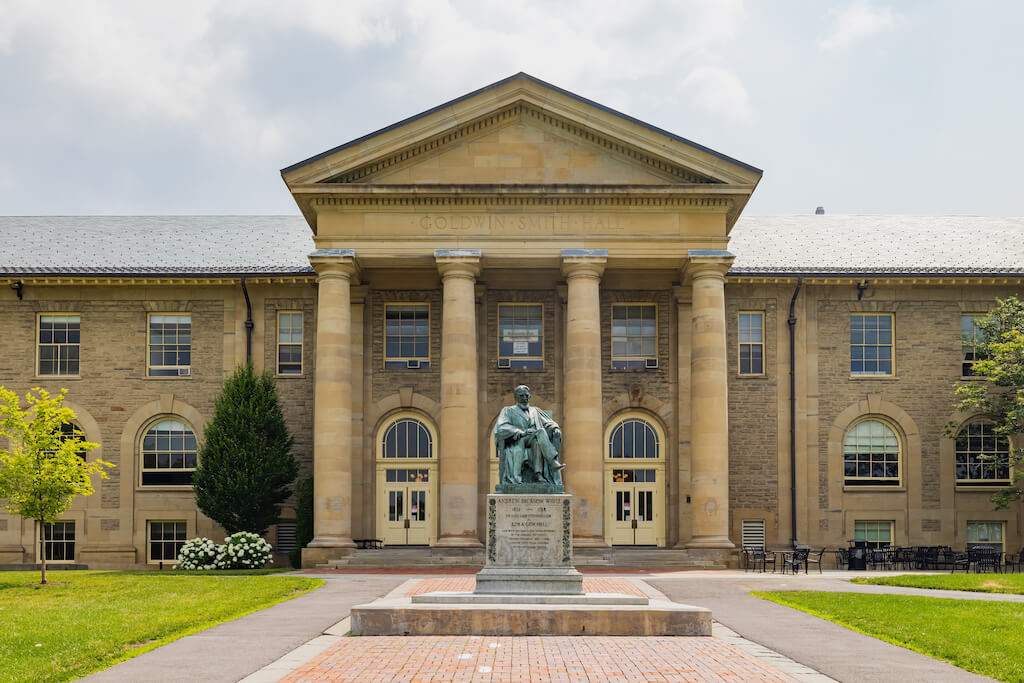
In the clamor for increasing graduation and persistence rates, are we ignoring the student at risk factors and student characteristics?

In the early days of online education, a commonly discussed phenomenon was the low completion rates of students.  Some chose to explain the departure of students using characteristics such as lack of social integration and academic integration for students matriculating in online programs as identified by Vincent Tinto and others.  As technologies utilized in the […]

Read More… from In the clamor for increasing graduation and persistence rates, are we ignoring the student at risk factors and student characteristics?

Alternative Certification – A Good Idea?

I have read three articles in the last three days about alternatives to earning a college degree, primarily through certification of one kind or another. The first article, from The Chronicle of Higher Education, discusses the concept of “badges” that are awarded by various websites, training companies, individuals, etc. The concept is that the badge […]

Read More… from Alternative Certification – A Good Idea?

Abelard to Apple: The Fate of American Colleges and Universities

Rich DeMillo has a lengthy background in academia serving as a professor at four different universities, Dean of Computing at Georgia Tech College of Computing, Director of the Computer and Computation Research Division of the National Science Foundation, and was Hewlett Packard’s first Chief Technology Officer.  His latest book, Abelard to Apple: The Fate of […]

Read More… from Abelard to Apple: The Fate of American Colleges and Universities

Why Government Should Engage the Private Sector in the Higher Education Discussion

In the past several years, online higher education has come under increased scrutiny by the federal government and policymakers.  As a relatively new trend, online education has been closely examined by some, not so closely examined by others, and has a number of critics.  In a recent report called “Odd Man Out: How Government Supports […]

Read More… from Why Government Should Engage the Private Sector in the Higher Education Discussion

Understanding the Real Cost of a Bachelor’s Degree

The October 2011 issue of American Enterprise Institute for Public Policy Research’s (AEI) Education Outlook included an interesting analysis of the total cost of a bachelor’s degree titled, “Cheap for Whom?:   How Much Higher Education Costs Taxpayers.”  The authors, Mark Schneider and Jorge Klor de Alva, go beyond a surface analysis of tuition rates, student […]

Read More… from Understanding the Real Cost of a Bachelor’s Degree

Veterans Day 2011

Today is Veterans Day, a day designed to celebrate our nation’s armed forces, their commitment, and their ultimate sacrifices.  Though this day comes only once each year, the special individuals to whom it is dedicated deserve our thanks every day.  The last year has been a tumultuous one for the entire world and the men […]

Read More… from Veterans Day 2011

Trouble in the Middle…Or the Part Between the Top 10 Percent and the Bottom 10 Percent?

I read an article in the October 15, 2011 issue of The Economist entitled “Trouble in the Middle.” The article begins by stating that interest in MBA programs at American business schools peaked in 2009 and applications have fallen since then. The author states that some business schools are worried that the trend is related […]

Read More… from Trouble in the Middle…Or the Part Between the Top 10 Percent and the Bottom 10 Percent?

Reviewing a Decade of College Spending

Last month the Delta Cost Project released its annual report on college spending, Trends in College Spending 1999-2009: Where Does the Money Come From?  Where Does It Go?  What Does It Buy?  Examining the decade between 1999 and 2009 the report paints a bleak picture of the current state of higher education spending with very […]

Read More… from Reviewing a Decade of College Spending

Revisiting No Child Left Behind

The No Child Left Behind (NCLB) Act, which received bipartisan support for its passage in 2001, requires that states implement a variety of assessment mechanisms for students and teachers in order to qualify for federal education funding.  This federal act does not establish criteria to which all states must adhere; the means of assessment are […]

Read More… from Revisiting No Child Left Behind

Despite Government Initiatives, US Colleges Not the Only Ones Facing Funding Challenges

In March 2000, the heads of state of the European Union (EU) nations set an ambitious goal for themselves: to make the EU “’the most competitive and dynamic knowledge-based economy in the world, capable of sustainable economic growth with more and better jobs and greater social cohesion’” by 2010.  Known as the Lisbon Agenda, this […]

Read More… from Despite Government Initiatives, US Colleges Not the Only Ones Facing Funding Challenges

Subjects of Interest

Artificial Intelligence/AI

EdTech

Higher Education

Independent Schools

K-12

Science

Student Persistence

The Future of Work

Workforce