APUS Opens Largest Solar Array in West Virginia

April 23rd, 2012


President Boston, Mayor Hamill, Vice Mayor Clendening, Congresswoman Shelley Moore Capito, and CFO Harry Wilkins cut the ribbon officially opening the APUS Solar Array.

Today I had the honor of hosting the ribbon cutting event for American Public University System’s (APUS) latest addition to its Charles Town campus, a 1,660 panel solar array.  The array is the largest solar project in the state of West Virginia and will produce approximately 480,000 kWh of energy.  The energy produced will provide between 40 and 50 percent of the energy needed to power the 105,000-square-foot green Finance Center which is under construction adjacent to the array and being built to US Green Building Council’s LEED Gold standards.  The array features 15 universal electric car charging stations and doubles as covered parking for the university’s staff and guests.  The array was fully constructed with American-made components and will produce enough electricity to power 30 average size homes annually.  To equate this to vehicles and commuting, the amount of electricity generated by the array would enable the average gas-powered vehicle to travel 1.9 million miles, the equivalent of 120 commuters driving 15,000 miles each year. 

I was joined at our ribbon cutting event by several notable dignitaries including West Virginia Congresswoman Shelley Moore Capito.  Vice Mayor of Charles Town, Don Clendening and Mayor of neighboring Ranson, David Hamill were also on hand to commemorate this event.  Congresswoman Capito, Vice Mayor Clendening, and Mayor Hamill have all expressed and demonstrated their own commitments to sustainability and sustainable development so it was especially fitting to have them in attendance.  We were able to demonstrate the universal electric car charging stations thanks to three local car dealerships (Apple Valley Chevrolet in Martinsburg, Younger Auto Group in Frederick and Hagerstown, and Renn Kirby Mitsubishi in Frederick) that showcased their own electric vehicles during the event.  The APUS Sustainability Committee also hosted an information booth to share information with visitors about the university’s comprehensive sustainability initiatives. 

Aerial view of the APUS solar array. The array contains more than 1,600 panels and will generate enough electricity to power 30 homes each year.

Today’s event and the comprehensive sustainability program at APUS not only represent our own commitment to sustainability but also illustrate the American spirit of ingenuity and innovation in general.  It was as much about providing renewable energy for our university as it was about making a commitment to our local and extended communities that we will continue to work to promote a more sustainable future for us all.  In 2007 when I signed the American College and University Presidents’ Climate Commitment (ACUPCC) as a charter signatory, I did so because I believe higher education has a unique opportunity to shape the future of the nation in addressing the issues associated with climate change. 

With access to some of the best and brightest minds, higher education would be remiss if it did not use that opportunity to address one of the nation’s – the world’s – most pressing problems.  The hallowed halls of the university can, in the most traditional sense, be seen as places for the exchange of theory and ideas.  Higher education has a unique opportunity, however, to lead by example and turn those theories and ideas into action.

Bookmark and Share

APUS Green Initiatives

April 20th, 2012

It has been a little while since I’ve provided an update on American Public University System’s (APUS) sustainability efforts.  There seems no better time to do so than Earth Day.  Despite my lack of updates on this blog, the APUS Sustainability Committee has been working diligently and partnering with other groups on campus to promote sustainability and make APUS a greener place to work and learn. 

One of the most visible sustainability efforts that we have undertaken relates to buildings.  As part of our commitment to the American College and University Presidents’ Climate Commitment (ACUPCC), we have pledged to build all new construction to at least US Green Building Council (USGBC) LEED Silver standards.  Our new 45,000-square-foot Academic Center, built on a brownfields site, is currently in the LEED certification process and we hope to achieve a Gold designation.  There are many green features in that building which we completed and occupied in late 2010.  The HVAC system is highly efficient and operates through multiple zones, for example.  In addition, the building is outfitted with energy efficient windows which are covered with sunshades to assist in further regulating indoor temperatures.  Occupancy sensor lighting fixtures and ENERGY STAR appliances can be seen throughout the building.  All materials used in construction and all furniture originated within 500 miles of the building site, decreasing the carbon emissions associated with materials transportation.  Perhaps, the crowning achievement of the Academic Center is 99 solar panels situated on the roof which supply approximately 7 percent of the building’s total energy needs.

Read the rest of this entry »

Bookmark and Share

APUS Sustainability Summit Provides Opportunity for Idea Sharing and Collaboration

August 4th, 2011

On July 21st, the APUS Sustainability Committee hosted its First Annual Sustainability Summit.  Since September 2007 when I signed the American College and University Presidents Climate Commitment (ACUPCC), the APUS Sustainability Committee has been working diligently to find ways to reduce the school’s carbon footprint. 

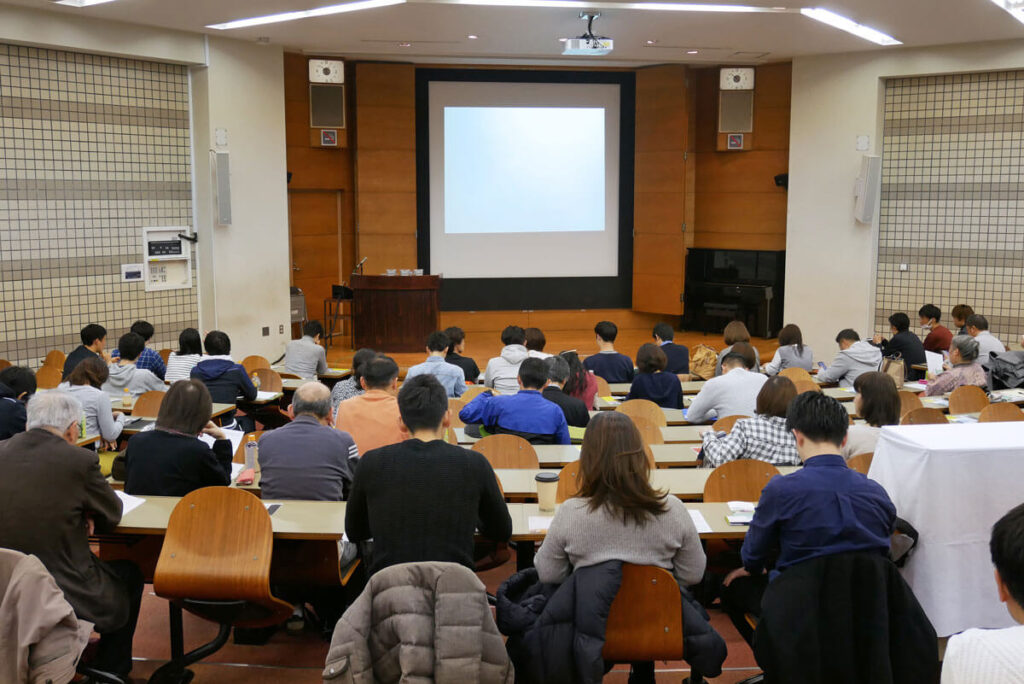
The event was an opportunity to share ideas for promoting sustainability within higher education and within the communities in which college campuses are situated.  The audience included members of the Jefferson County Commission, representatives of the Jefferson County Planning Commission, the Mayor and other officials from Ranson, WV, the President of Shepherd University, Dr. Suzanne Shipley, and other higher ed representatives from APUS and West Virginia University (WVU), and various representatives of the building and development industry.

Rather than provide a few introductory remarks, I chose to provide the audience with a history of the acquisition, renovation, and construction of the buildings comprising APUS’ Charles Town, WV campus as well as some of the other green initiatives implemented by the Sustainability Committee since 2007 (click here to see my presentation).  I explained that our pathway to green construction occurred over time as we could see the demonstrated benefit to the community, our employees, and our energy consumption.

Read the rest of this entry »

Bookmark and Share

Is it reasonable to assume a goal of achieving carbon neutrality?

June 27th, 2008

I attended The Chronicle of Higher Education’s annual Executive Leadership Forum in Washington, DC and had the opportunity to listen to a panel discussing the pros and cons of signing the Presidents Climate Commitment. David Oxtoby, President of Pomona College and former Dean of Physical Sciences at the University of Chicago, made a point which was similar to my thinking that he had some reservations about his and any institution’s ability to achieve carbon neutrality but thought that the process of examining efforts and pledging a commitment was important. Oxtoby earned his PhD in Physical Chemistry from UC-Berkeley and has the background to understand the scoring system. Another point that he made was that his institution does not and will not buy the emission credits that other institutions have purchased as he does not believe that the buyer can control the long term outcome (the owner of the forest could harvest the trees, for example). Mark Wrighton, Chancellor of Washington University in St. Louis, said that his institution had not signed the Commitment but discussed the many activities underway to reduce carbon emissions including supporting a light rail with five stops at WU and providing rail passes to employees. Kathleen Schatzberg, President of Cape Cod Community College and one of the charter signers of the Commitment, discussed her efforts to obtain state of Massachusetts approval for the first LEED-certified building at a state higher ed institution. Other efforts at her campus included converting 80 percent of previously mowed open space to meadows and receiving funding for a wind turbine. I left the session inspired by the efforts of the three institutions and their presidents.

Read the rest of this entry »

Bookmark and Share
Copyright © 2012. American Public University System. All Rights Reserved. | Terms of Use