NEST 2011 – Networking Ed Entrepreneurs for Social Transformation

June 13th, 2011

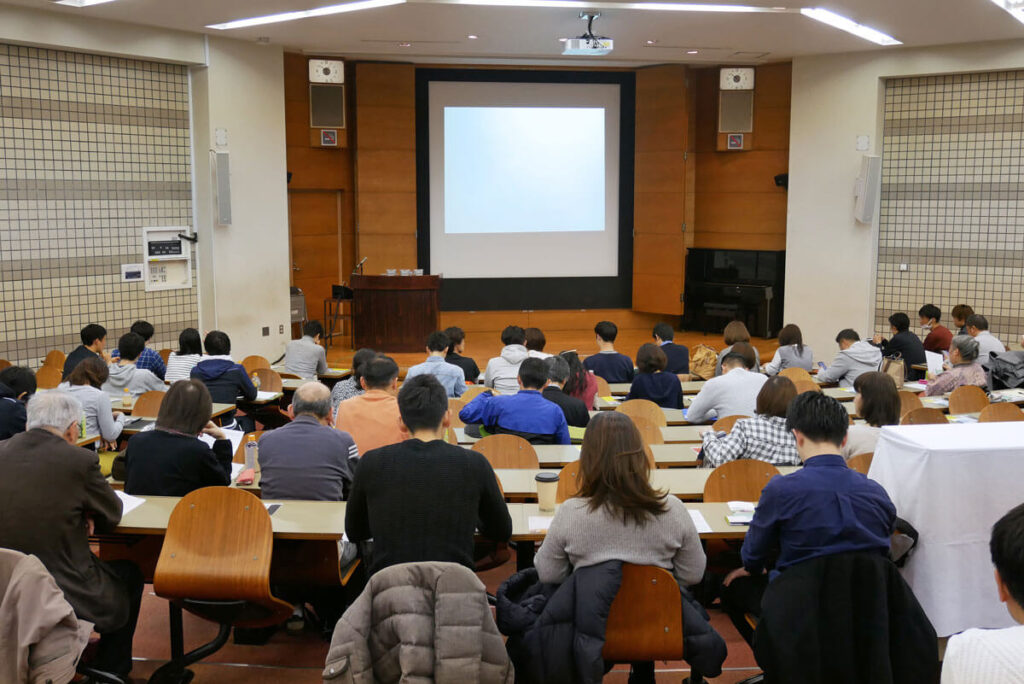
I attended the NEST 2011 Conference at the University of Pennsylvania last week.  Sponsored by Penn’s Graduate School of Education (GSE) (of which I am a graduate), the conference attempts to match education entrepreneurs with investors, educators, and a policy maker or two.  The two day event included a business plan competition sponsored by Penn GSE and the Milken Family Foundation as well as the Startl Prize for Open Educational Resources in partnership with the Hewlett Foundation.  The latter award is for the “best business plan that leverages openly licensed content to change the paradigm around the production, delivery, sharing, and experience of learning.”

Penn GSE’s Vice Dean, Douglas Lynch, has built a NEST community of approximately 130 people who are committed to encouraging and/or supporting ed entrepreneurs.  Members of the community volunteer as judges for the business plan competition and enjoy meeting like-minded individuals at the conference.   Day one of the conference revolved around presentations by teams from the finalists for the business plan competition.  Alexandre Scialom won a prize for his startup company, theCourseBook.  TheCourseBook.com is a website that lists courses for adult learners and rates them, similar to Yelp.  While the beta prototype for the company is currently limited to a few cities in California, its goal is to widen its span nationally.  The second day of the conference was more interactive with the members of NEST.  After a short talk from Andy Porter, Dean of Penn GSE, members of the group participated in discussions about research and its importance to the education entrepreneurs/business community as well as other topics such as national regulations, for-profit and non-profit ventures, etc.

I congratulate Andy Porter, Doug Lynch and the rest of the team at Penn GSE for sponsoring the NEST conference and initiative.  When a graduate school at one of America’s great research universities can arrange a connection with entrepreneurs, investors, educators, and policy makers, hopefully better communications and understanding at a national level will be a result.

Bookmark and Share

Back From School

April 19th, 2010

In December, I wrote a post about why the frequency of my writing slowed and would continue to slow.  The explanation was simple:  I had entered a doctoral program and was engaged in the final writing stage of my dissertation.  I am pleased to say that I satisfactorily completed all the requirements for my doctoral program at the University of Pennsylvania including defending my dissertation.  Now that I have had a couple of weeks to savor the accomplishment, I am ready to resume some of my “free time” activities that I postponed or slowed in order to go back to school and earn my doctoral degree.  As I begin to resume blog posts, I thought I would share my reflections on my area of studies.

When I completed my MBA from Tulane’s Freeman School of Business in 1978, I thought I had completed all of my formal academic studies.  After graduation from Tulane, I sat for and passed the CPA (Certified Public Accountant) exam, the CMA (Certified Management Accountant), and the Fellow exam for the Healthcare Financial Management Association.  Maintaining those certifications required annual continuing education hours, but not academic credits.  Usually, I could earn 40 hours of credit per year by attending a couple of two day seminars along with a single day seminar.

Read the rest of this entry »

Bookmark and Share

Why the Frequency of my Posts Slowed

December 16th, 2009

I haven’t written for this blog in almost a month.  The reason is simple.  I have not been able to bridge the gap between thoughts and comments on primarily current events in higher education and academic research.

Several years ago, I heard about a doctorate program at the University of Pennsylvania’s Graduate School of Education that was designed for people who were employed full-time in higher education.  The doctorate was in higher education management.  With an ongoing interest in learning (what else is lifelong learning), I engaged in a dialogue with the Board of Trustees of the American Public University System (APUS) and the Board of Directors of American Public Education, Inc. (APEI) about the merits of enrolling in this program if I were accepted.  Both of the boards were supportive of my interest.  The primary question was related to timing.  I applied and was accepted.  There were several doctoral programs around the country designed for people working full-time, but the program at UPenn was the one that I wanted to attend.

Read the rest of this entry »

Bookmark and Share

Some Colleges and Universities Considering Three-Year Degrees in Attempt to Increase Access while Reducing Costs

July 13th, 2009

Questions of access and affordability have plagued higher education for many years.  Coupled with the implications of the recent global economic downturn, these issues have received even greater consideration in the last several years.  As college administrators attempt to tackle the problems associated with providing greater access and affordability, creative ideas are being formulated.

One such idea recently gaining attention is scaling back the length of time it takes to receive a bachelors degree from the traditional four years to three.  This past February, at the annual conference of the American Council on Education, Senator Lamar Alexander (R-TN) addressed attendees and suggested that instead of four years, colleges should consider offering bachelor degrees that can be earned in only three.  Alexander suggested that doing so would not only obviously cut the length of time required to earn a degree by one-fourth, but also cut the cost of earning the same degree by as much as one-third.  Alexander was quoted in a February 2009 article in Inside Higher Ed as equating such a concept to the development of a fuel-efficient vehicle.

Read the rest of this entry »

Bookmark and Share

Thoughts About Writing

June 26th, 2009

Some time ago, I thought about writing an article about writing.  While I have read articles and research about some of the new words in the English language created through texting shorthand and the impact of the pace of quickened communication on our written language, I note that there is no substitute for a well-written book, document, article, memo, etc.

I make no claims to being a writer, professional or amateur.  I do not publish academic research at the present time.  However, I have enjoyed reading since the beginning (first grade for me), and the enjoyment of reading has given me an appreciation for the quality of writing.

Read the rest of this entry »

Bookmark and Share
Copyright © 2012. American Public University System. All Rights Reserved. | Terms of Use